


Since 2004 to date, I have been regularly making literary translations from Russian into Spanish of several masterpieces of Russian literature of the 19th and 20th centuries. For example, classics such as Crime and Punishment, The Gambler and Notes from Underground, by F. Dostoevsky; Dead Souls, by N. Gogol; First love, by I. Turgenev; We, by E. Zamyatin; Dersú Uzalá and Through the Territory of the Ussuri, by V. Arseniev, and Hadzhí Murat, Stories from Sebastopol, After the Dance and The Prisoner of the Caucasus, by L. Tolstoy, the latter four included in the book of stories Echoes of Crimea and of the Caucasus. The works, most of whose prologues I have also composed, are published in Spain by the Akal publishing house, as well as in Mexico and Latin America by Ediciones Castillo. I have also translated from English to Spanish Queen, a biographical work about the musical group of the same name, published in Spain by the publishing house Sport Life Ibérica.

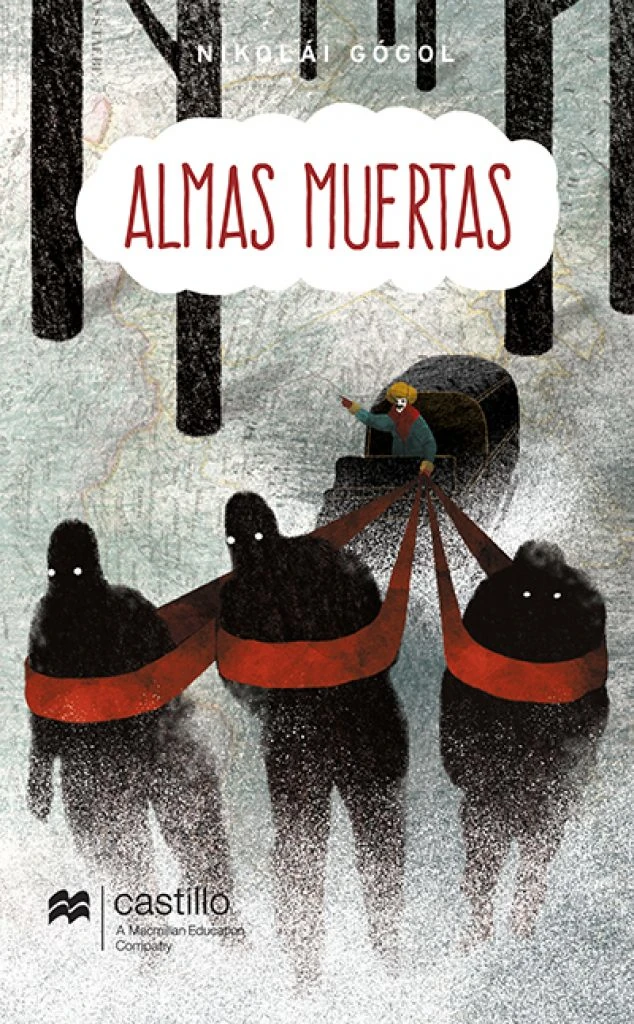
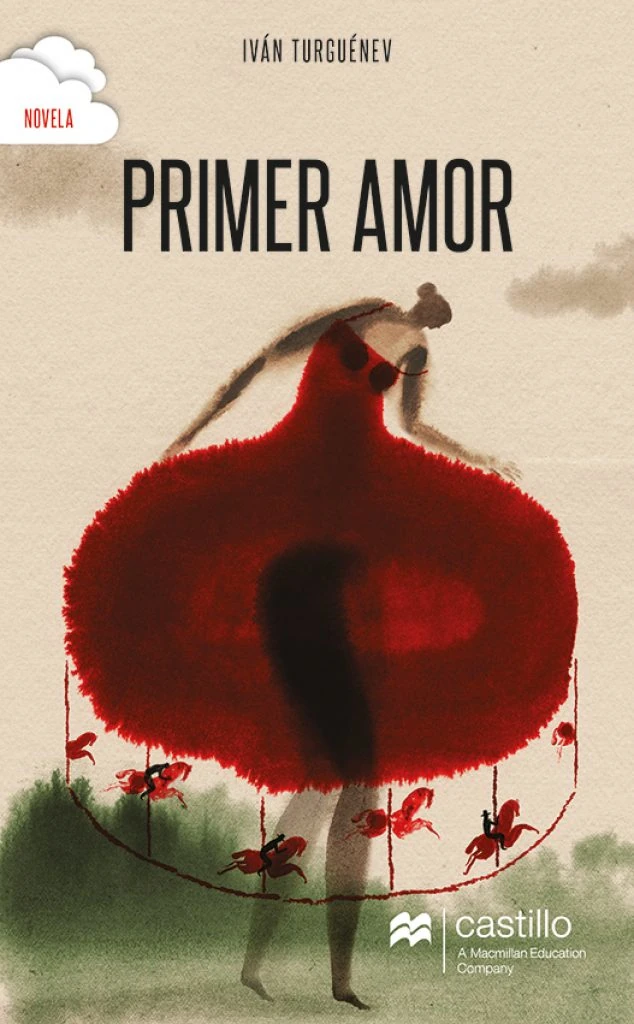



You can purchase some work in the store akal.
More about Russian literary works

de Fiódor M. Dostoievski (writer), Sergio Hernández-Ranera (translator)
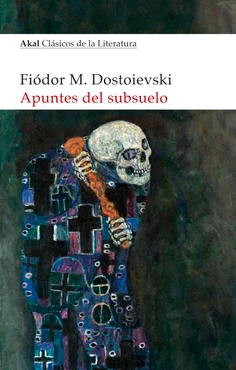
Notes from the underground
Notes from the Underground is the testimony of anyone – or, what is the same, of each and every one of us – who, socially alienated and paralyzed by his own insignificance, tells the story of his tortured life. With bitter irony, he describes his refusal to become a worker in the “anthill” of society and his gradual retreat into a marginalized, irrational and misunderstood existence.
This masterpiece of universal literature published in 1864, although a short piece, is essential to understand the pained and pessimistic spirit of the wandering Dostoevsky. Organized in two parts, the first basically consists of an internal monologue of the protagonist who addresses his talk to a non-existent audience. The second part consists of the story of a long memory of the narrator, where the thoughts expressed at the beginning take on full meaning. The man from the underground will turn out to be an unequivocal paradigm of many of the antiheroes and a source from which the stories that will dominate the novel of the 20th century draw.

de Lev Tolstói (writer), Sergio Hernández-Ranera (translator), Ernesto Calabuig (writer)
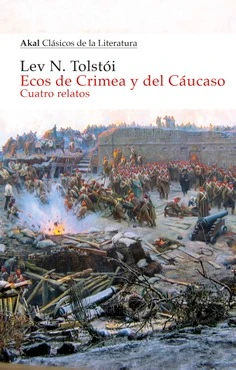
Echoes of Crimea and the Caucasus
Echoes of the Caucasus is composed of four stories by Lev N. Tolstoy: Stories from Sevastopol (1855), The Prisoner of the Caucasus (1872), After the Dance and Hadzhí Murat, from 1903, in which the author’s life experience is key to transfer a historical base from which to convey the pacifist message that reigns in all his work, where suffering is distributed unequally between the social classes that make up the tsarist army. The Sevastopol Stories are three “journalistic-literary” chronicles that detail the terrible siege of this city during the Crimean War, which lasted from 1853 to 1856, and which Tolstoy lived as an artillery ensign. The Prisoner of the Caucasus, After the Dance and Hadji Murat are set against the backdrop of the Caucasian Wars of the mid-19th century, in Chechnya. In After the Dance, he also presents in great depth a moral dilemma through two feelings experienced in the same night: love and barbarism. Hadzhí Murat (1903), his last novel, tells the story of a fugitive pursued by his former Chechen comrades, who offers his services to the Russians in exchange for help. In all these stories, war, combat, conversations, dances, betrayals, loves or revenge ultimately represented a scenario, that of the human race, with its passions and ambitions, a vast world that stretched before the eyes. eyes of someone who knew how to read and interpret it like few others: the enormous observer, connoisseur and narrator of the human soul that was Lev. N. Tolstoy.

de Evgueni Ivánovich Zamiatin (writer), Tavo Montañez (illustrator), Sergio Hernández-Ranera (translator)
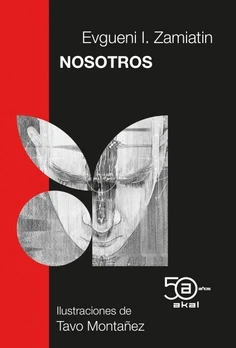
Us
D-503’s life is something ideal, rational and precise.
Under the rule of the omnipresent Single State, perfection has been achieved. To conquer society, society had to renounce any glimpse of nature in favor of technology and the control of humans, who have ceased to be individuals and have become numbers.
The happiness of D-503 is an unavoidable obligation.
Thus the days go by for D-503 until a small cloud clouds his tranquility: a woman, I-330, shows him a world completely unknown to him, a world of illness and passions, a world forbidden and banished a long time ago. Unknowingly, D-503 has taken the first steps towards rebellion.


de Fiódor M. Dostoievski (writer), Fernando Vicente (illustrator), Sergio Hernández-Ranera (translator)
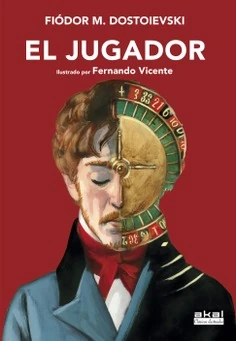
The player
The year was 1866, and although Fyodor M. Dostoevsky was immersed in writing Crime and Punishment, he was forced to create one more novel: The Gambler. It is a story developed under very complicated conditions, since it was not in vain that it was dictated in just over a week to his secretary, personal stenographer and later second wife, Anna Grigorievna. By contract, the deadline for delivering a work to its publisher was coming to an end in the autumn of 1866 and, far from being daunted, the great Fyodor dictated a vibrant, insolent and full of emotions story that he already had prodigiously orchestrated in his head. . A harsh, direct and open language reveals a Dostoevsky in a state of grace, offering us a hurried story, a tormented author, a turbulent time…, in an edition illustrated by Fernando Vicente, whose poetic gaze and visual metaphors enhance the beauty and freshness of the story. Few novels emerge and endure over time with the tremendous force that only a writer of the stature of Fyodor M. Dostoevsky knows how to give to a narrative.
La portada de la derecha es una edición de mexico.

de Vladímir Arséniev (writer), Sergio Hernández-Ranera (translator)
Through the territory of Ussuri
Based on a real travel diary, Through the Ussuri Territory is the story that the explorer and ethnographer Vladimir Arsenyev composes of his first encounter with a native during an expedition through the Russian Far East: the gold Dersú Uzalá. Dersú not only immediately becomes the best guide for an expedition, but also regains Arsenyev’s trust in the human race: «The more closely I observed that man, the more I liked him. Every day I discovered new qualities in him. Previously I thought that selfishness is especially characteristic of the savage man and that the sense of humanity, philanthropy and care for one’s neighbor were only inherent in Europeans. Wouldn’t I be wrong?
A tribute to the fascinating figure of this native and to a nature that is known to be already threatened, Through the territory of Ussuri precedes Dersú Uzalá also published in this collection as the first part of the precious friendship that the Russian Arseniev and the gold Dersú cultivated in almost always random conditions.

de Vladímir Arséniev (writer), Sergio Hernández-Ranera (translator), Rubén Sanz Redondo (translator)
Dersú Uzalá
In this book, Vladimir Arsenyev recalls the adventures and friendship he shared with Dersú Uzalá, a native of the Russian Far East that he chanced to meet on one of his expeditions through the taiga. A peculiar narrative style, as simple as it is full of humanity and scientific rigor, is perhaps the secret to the success of the work of this Russian writer-explorer, absolutely amazed by the imposing nature of the confines of his gigantic country. Without literary tricks and with just a couple of invented biographical data, Dersú is presented as the wise personification of the environment, while Captain Arsenyev is the involuntary spearhead of the threat to those ecosystems that he so admires. The reader will see that a century after the meeting between Arseniev and Dersú, the advance of human progress continues to make its impact on an environment that, in this book, is also one of the guiding threads of the narrative.

Us
Long before Huxley and Orwell did, the Russian Evgueni I. Zamyatin managed to compose this surprising narrative in 1920, which marks the full-fledged beginning of the anti-utopian novel. A strange poetry of mathematical precision reigns throughout this work, which, loaded with irony, continues to warn us, today more than ever, that we will never be safe from the totalitarian vocation. “And we, my dear readers from another planet, will go visit you so that your life is as ideal, rational and precise as ours,” says the ship’s builder. With the phenomena of globalization and climate change already underway, the warning suggested by this imposing novel is more valid than ever.

El jugador
There’s nothing glamorous about the gambling halls of the brooding spa town of Ruletenburg; neither elegant gentlemen with refined manners, nor vaporous ladies of unparalleled beauty. Not even the shine of stacked gold. There is only continental rabble: lazy people and street urchins, representatives of the high-born European scoundrels of the time. The desire to get easy money is disguised as noble disdain until the disturbance generated by a young Russian woman blows up everyone’s relationships. Ruin, dementia, hatred, deceit and disappointment are just some of the explosive turbulence that a man, Alexei Ivanovich, unleashes in a paradise caught by pins and needles. In the process, some of the most acute reflections of the brilliant Fyodor M. Dostoevsky emerge, which today would surely provoke more than one complaint before the diplomatic representations of half of Europe.
Other literary works

QUEEN
un libro imprescindible para los coleccionistas y amantes de QUEEN, la banda que en los años 80 supuso un antes y un después en la historia del rock. El lector a través de los artículos y entrevistas exclusivas de Classic Rock, recorre la trayectoria de QUEEN desde sus primeros años, pasando por la creación de A Night at the Opera o la actuación en Live Aid, hasta llegar al concierto tributo a Freddie y el estreno de la película Bohemiam Rhapsody.
Son 148 páginas en gran formato a todo color con imágenes para el recuerdo, que analizan la trayectoria de la mítica banda y la historia de sus cuatro componentes, el irrepetible Freddie Mercury, Brian May, Roger Taylor y John Deacon.
These artwork covers are incredible.

